
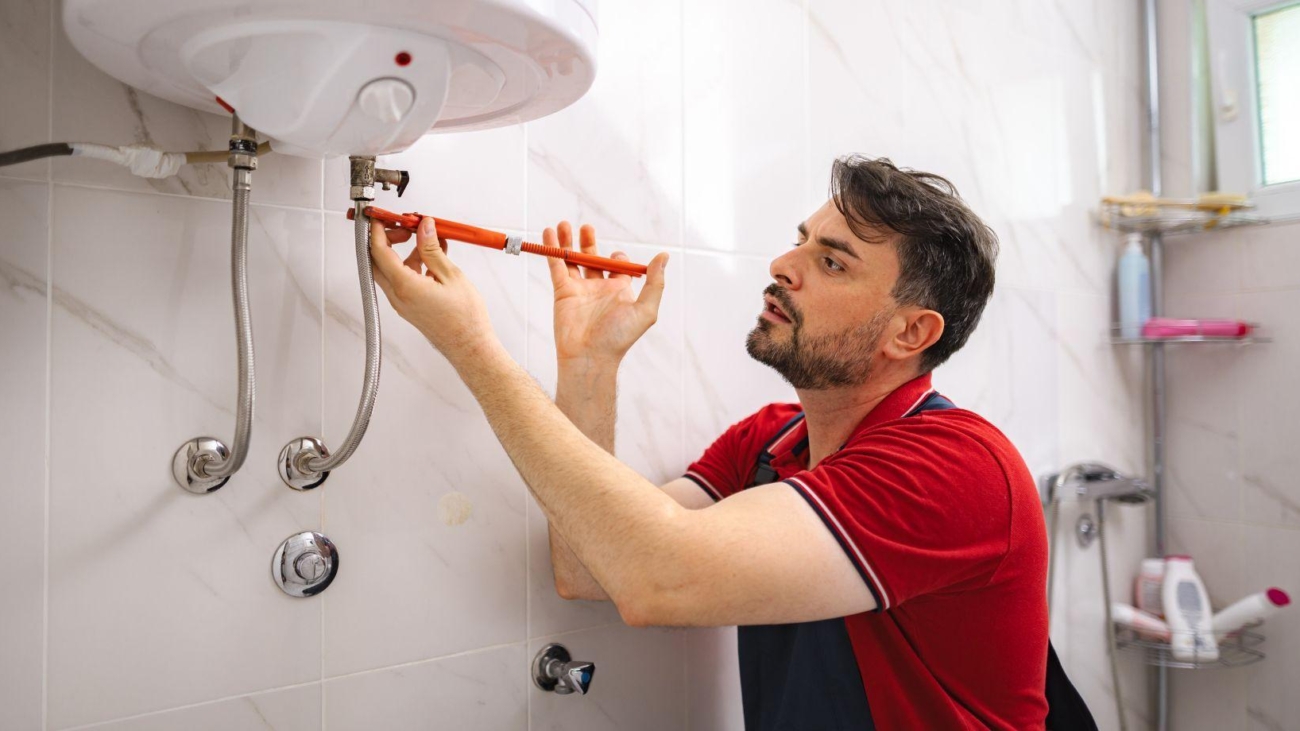
Every water heater eventually presents homeowners with the same question: is this worth fixing, or has it finally reached the point where replacement makes more sense? It’s rarely an obvious call in the moment, especially when the unit is still technically working. But there are clear signals that tend to point one direction or the other once you know what to look for.
Why This Decision Trips Up So Many Homeowners
Part of the difficulty is that water heaters don’t fail dramatically most of the time. They degrade slowly — a little less hot water here, a slightly longer wait there — until one repair turns into a pattern of repairs, and suddenly the “quick fix” mentality has cost more than a replacement would have from the start.
The other complication is emotional as much as financial. Nobody wants to spend money replacing something that still technically functions. But a system on its way out rarely gives you the luxury of choosing a convenient time to deal with it.
The Age Threshold That Actually Matters
Most standard tank water heaters are built to last somewhere between 8 and 12 years. Heat pump and tankless systems tend to run longer, but they’re not immune to the same wear patterns eventually.
Once a unit passes that age range and something breaks, the odds of a second issue showing up within the year climb significantly. As internal components age together, it’s common for one failure to be followed by another within months. Homeowners exploring water heater repair in Sunnyvale, CA, on older units often discover this firsthand — the first fix holds for a few months, then something else goes.
Running the Actual Cost Comparison
There’s a practical rule worth applying here: if a repair costs more than half of what a full replacement would run, replacement is almost always the better financial decision. It sounds simple, but homeowners frequently underestimate how quickly repair costs stack up on an aging system.
A $300 repair feels reasonable in isolation. Three of those within eighteen months on a ten-year-old tank adds up to nearly the cost of a new unit — without actually solving the underlying problem, which is a system that’s simply reaching the end of its usable life.
Physical Signs That Point Toward Replacement
Beyond age and repair frequency, a handful of physical signs tend to indicate a system is closer to failure than a quick fix can address:
Seeing two or more of these together usually means the unit is telling you something a single repair won’t fix.
When Repair Is Still the Right Call
None of this means every issue points toward replacement. A relatively young unit with an isolated problem — a faulty thermostat, a tripped reset button, a minor sediment buildup — is almost always worth repairing rather than replacing. These fixes are quick, inexpensive, and restore full performance without much disruption.
The mistake is applying the same logic regardless of the system’s age. Context changes the right answer considerably, and a five-year-old tank deserves a different approach than a twelve-year-old one facing the same symptom.
Making the Decision With Confidence
There’s no one-size-fits-all answer, but when you consider your water heater’s age, repair history, and operating expenses together, the right decision often becomes much clearer than focusing on a single issue.
A proper inspection can tell you within minutes whether you’re looking at a simple fix or the start of a bigger pattern — and that clarity alone is often worth more than the visit costs. Getting ahead of the decision, rather than being forced into it by a sudden failure, means choosing the timing and the budget on your terms.