
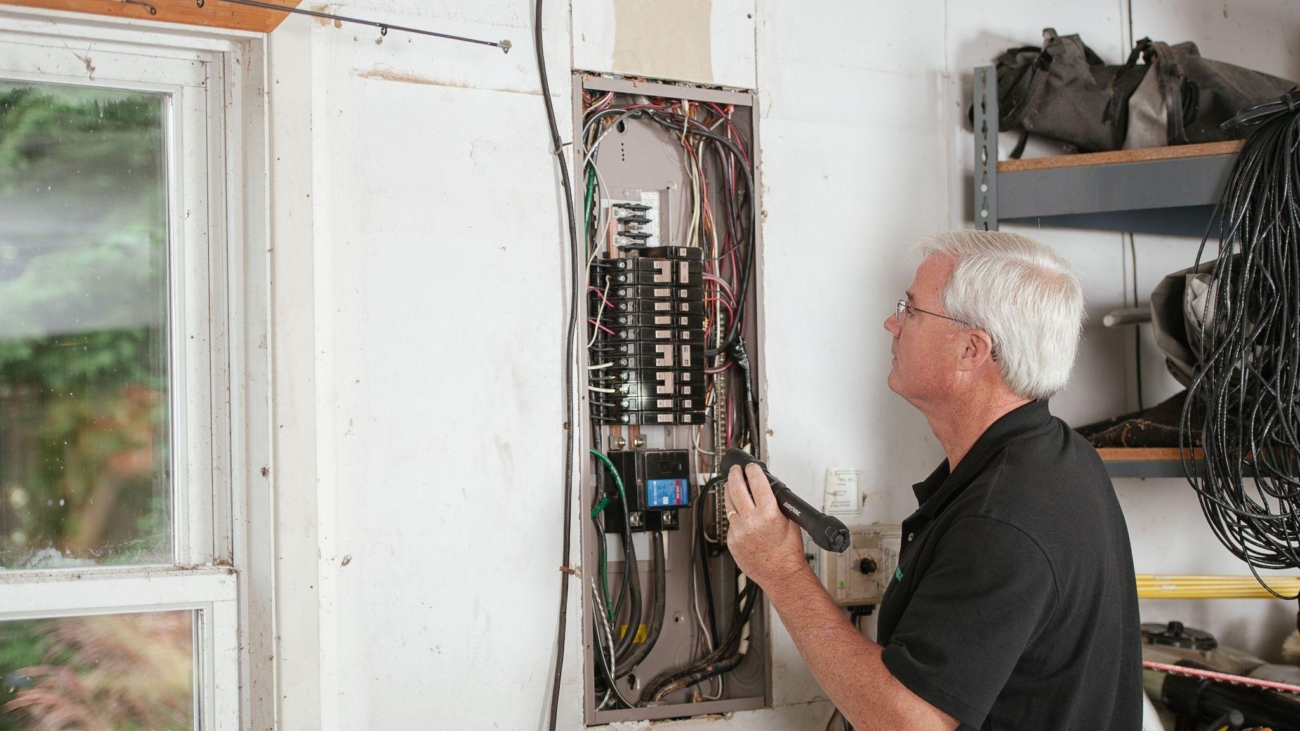
Most homeowners can tell you when the hot water system is on its last legs, or when the guttering needs replacing. Far fewer could tell you what’s behind that little grey door in the garage or hallway, even though it quietly controls every powerpoint, light and appliance in the house. The switchboard is one of those things nobody thinks about until it fails, and by then it’s usually already caused a tripped circuit, a scorch mark, or a genuine scare. If your home is more than twenty years old, or nobody’s looked behind that door since you moved in, it’s worth knowing what the warning signs actually look like before they turn into a problem you can’t ignore.
Your switchboard still runs on ceramic fuses
Ceramic fuses are the round porcelain ones with a fuse wire running through them, and if you’ve got them, your switchboard predates modern safety switches altogether. They work by burning through a wire when a circuit overloads, which sounds fine until you realise how slow and unpredictable that process is compared to a circuit breaker. Rewiring one after it blows also means someone handling live wiring by torchlight, which is not something you want a guest doing at 11pm because the kettle and the heater were on at once. If this describes your board, it’s not really a question of if you upgrade, just when.
There’s no safety switch protecting your circuits
A safety switch, technically a residual current device or RCD, is the thing that cuts power in a fraction of a second if current starts leaking somewhere it shouldn’t, like through a person. Australian building standards have required them on power and lighting circuits in homes for years now, but plenty of older properties were never retrofitted because nobody made them. Without one, a faulty appliance or a nicked cable can turn into a genuine electrocution risk, not just an inconvenience. This is arguably the single most important item on this list, because it’s the difference between a shock and a fatality.
Breakers trip, or fuses blow, more often than they should
Every household trips a breaker occasionally, usually because too much is running on one circuit. But if it’s happening weekly, or you’ve started unplugging the toaster before you can use the microwave, that’s your switchboard telling you it can’t keep up with modern demand. Older boards were built for a couple of lamps and a fridge, not induction cooktops, ducted air conditioning and three phone chargers per bedroom. Repeated tripping is inconvenient today, but the wear it puts on ageing components makes it a bigger risk tomorrow.
Lights flicker or dim when something else switches on
If your lights dip every time the air conditioner kicks in, or a powerpoint buzzes faintly when you plug something in, that’s usually a sign of voltage fluctuation caused by an overloaded or deteriorating board. It’s easy to write off as a quirk of the house, and a lot of people do for years. It’s not a quirk though, it’s a symptom, and symptoms like this tend to get worse rather than resolve themselves.
You’ve noticed a burning smell or scorch marks near the board
This one needs no interpretation. A burning smell, discolouration, or visible scorch marks around the switchboard means heat has been building up somewhere it shouldn’t, usually from a loose connection or an overloaded circuit arcing under load. Treat it as urgent, not something to keep an eye on. Turn off what you safely can and get someone qualified out immediately, because this is the sign that most directly precedes an electrical fire.
You’re renovating, adding solar, or installing an EV charger
Any of these will add real load to a system that might already be running close to capacity. Solar inverters and EV chargers in particular need specific switchboard configurations to work safely and to comply with current standards, so it’s rarely as simple as just plugging them in. Most licensed electricians will tell you the same thing: check the switchboard’s capacity before you commit to solar quotes or a kitchen extension, not after the tradesman turns up and finds the board can’t handle it.
The board looks visibly old, rusted, or cobbled together
Sometimes the tell is purely visual. Rust on the casing, mismatched breakers clearly added at different times, exposed wiring, or a board that looks like it hasn’t been touched since the house was built are all reasonable reasons to get it checked, even without an obvious fault. A switchboard is meant to be simple and predictable. If yours looks like it’s been patched together piece by piece over forty years, that’s exactly what’s happened, and it’s worth a proper look.
Getting it checked properly
None of these signs demand you replace anything on the spot, but they’re a reasonable prompt to get an inspection booked rather than waiting for a fault to make the decision for you. A qualified melbourne electrician can assess the board in well under an hour and tell you honestly whether it needs a full upgrade or just a smaller fix, like adding a missing safety switch. Given what’s actually at stake, both for safety and for the resale value of the house, that’s a fairly small ask. It’s the sort of job that’s easy to put off precisely because the switchboard works fine right up until the day it doesn’t, and that’s exactly why it’s worth checking now rather than later.