
Highlights:
- Native plants now appear in ~60% of new landscape designs and use 50–75% less water than turfgrass, making them the practical backbone of any low-maintenance shady yard.
- Not all shade is equal — mapping your yard’s actual sun hours (full shade vs. dappled light vs. part shade) before planting is the single most important first step.
- Layering like a forest (canopy → shrubs → perennials → ground cover) creates visual depth and a self-sustaining ecosystem, even in a very small space.
- Path material makes or breaks a shaded garden — stepping stones with native ground cover fill and shredded bark paths are the most forgiving and naturalistic choices.
- Native plantings cut pesticide use by roughly 80% and largely maintain themselves by year two or three, making “low maintenance” a realistic promise, not a marketing claim.
If you’ve got a small yard that barely gets a sliver of sun, you’ve probably wrestled with that familiar mix of guilt and frustration — the patchy lawn, the scraggly hostas that never seem happy, the gravel path that felt like a good idea at the time. Here’s the thing: a shady yard isn’t a problem to solve. It’s a design opportunity to embrace, especially when you bring native plants into the picture.
The good news? Gardeners and landscapers are catching on in a big way. The data backs this up, and we’ll dig into two telling statistics in a moment. But first, let’s talk about how to actually approach a small shaded space — the layouts that work, how to layer plants like a pro, and how to build paths that look good and stay that way without constant fussing.
Why Native Plants Are the Smart Choice for Shade
Before we get into layout and design, let’s settle one question: why native plants specifically?
The short answer is that native plants evolved to thrive in your conditions — including low light, specific soil types, and local rainfall patterns. They don’t need coaxing, overwatering, or a cocktail of fertilizers to look decent. They just grow.
The longer answer involves some compelling numbers. According to a 2026 landscaping statistics roundup from Gitnux, native plants now appear in roughly 60% of new landscape designs, a figure that reflects a genuine shift in how homeowners and designers are thinking about outdoor spaces. That’s not a niche trend anymore — it’s becoming standard practice.
And there’s a very practical reason for that momentum: native plants consume anywhere from 50 to 75% less water compared to conventional turfgrass. In a shady yard where moisture can already be unpredictable — pooling in some spots, surprisingly dry in others depending on root competition — that kind of efficiency matters a lot. You’re not fighting against the conditions; you’re working with them.
This is exactly why shade-adapted native species like wild ginger (Asarum canadense), native ferns, Virginia bluebells, and foamflower (Tiarella cordifolia) have become go-to choices for designers working with light-limited spaces. They were built for this.
Reading Your Shade Before You Plant Anything
One of the most common mistakes people make with shady yards is treating all shade as the same. It isn’t. There’s a real difference between:
- Full shade (less than 3 hours of direct sun per day) — think areas directly under a dense tree canopy or between close buildings
- Part shade / dappled light (3–6 hours, often filtered) — the sweet spot for the widest variety of native understory plants
- Deep shade — essentially no direct sun, where even shade-tolerant plants can struggle
Spend a full day in your yard before you commit to a planting plan. Walk through at 8am, noon, and 4pm and note where light actually lands. You’ll probably find more variation than you expect, and that variation can shape your entire layout strategy.
Designing the Layout: Working With, Not Against, the Space
Small yards require a slightly different approach than large ones. You can’t rely on sheer plant volume to create visual impact, so structure and intentional layers do the heavy lifting.
A few layout principles that work especially well in small, shaded spaces:
Create a Clear Focal Point
In a limited space, one strong anchor — a beautifully shaped native shrub like a dwarf serviceberry (Amelanchier alnifolia), or a cluster of tall native ferns — gives the eye somewhere to rest. Without it, small yards can feel chaotic.
Use the Edges, Not the Center
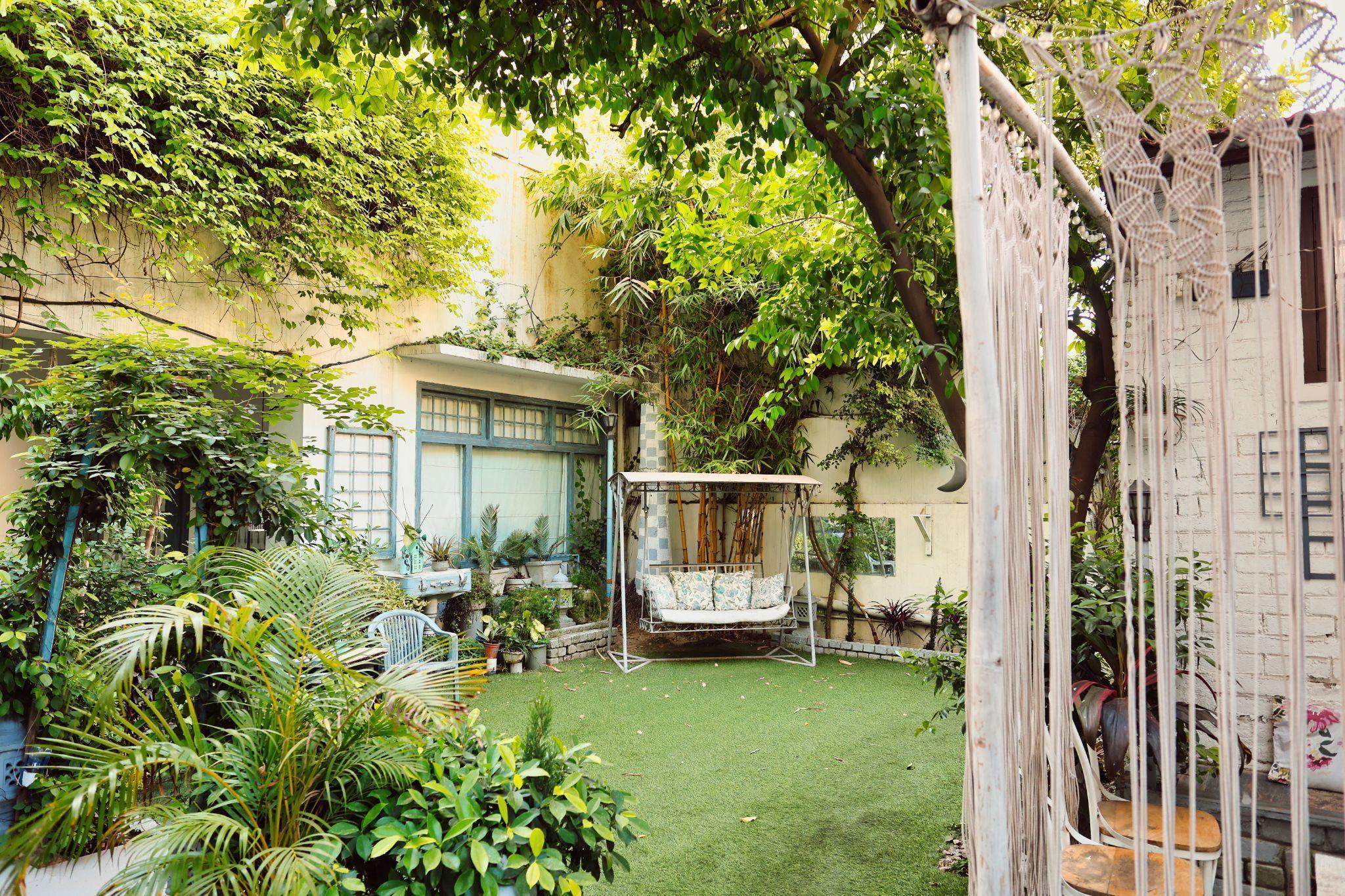
Resist the urge to plop plants in the middle of the space. In a small shady yard, planting densely along the perimeter creates depth and makes the yard feel larger. It also mimics how plants naturally grow at the edge of a woodland — which is exactly the habitat you’re recreating.
Don’t Underestimate Ground Cover
The floor of your design matters just as much as the vertical elements. Native ground covers like creeping phlox, wild strawberry, or pachysandra alternatives (Allegheny spurge is a beautiful native option) tie everything together and suppress weeds without a lot of intervention.
The Layering Approach: Thinking Like a Forest
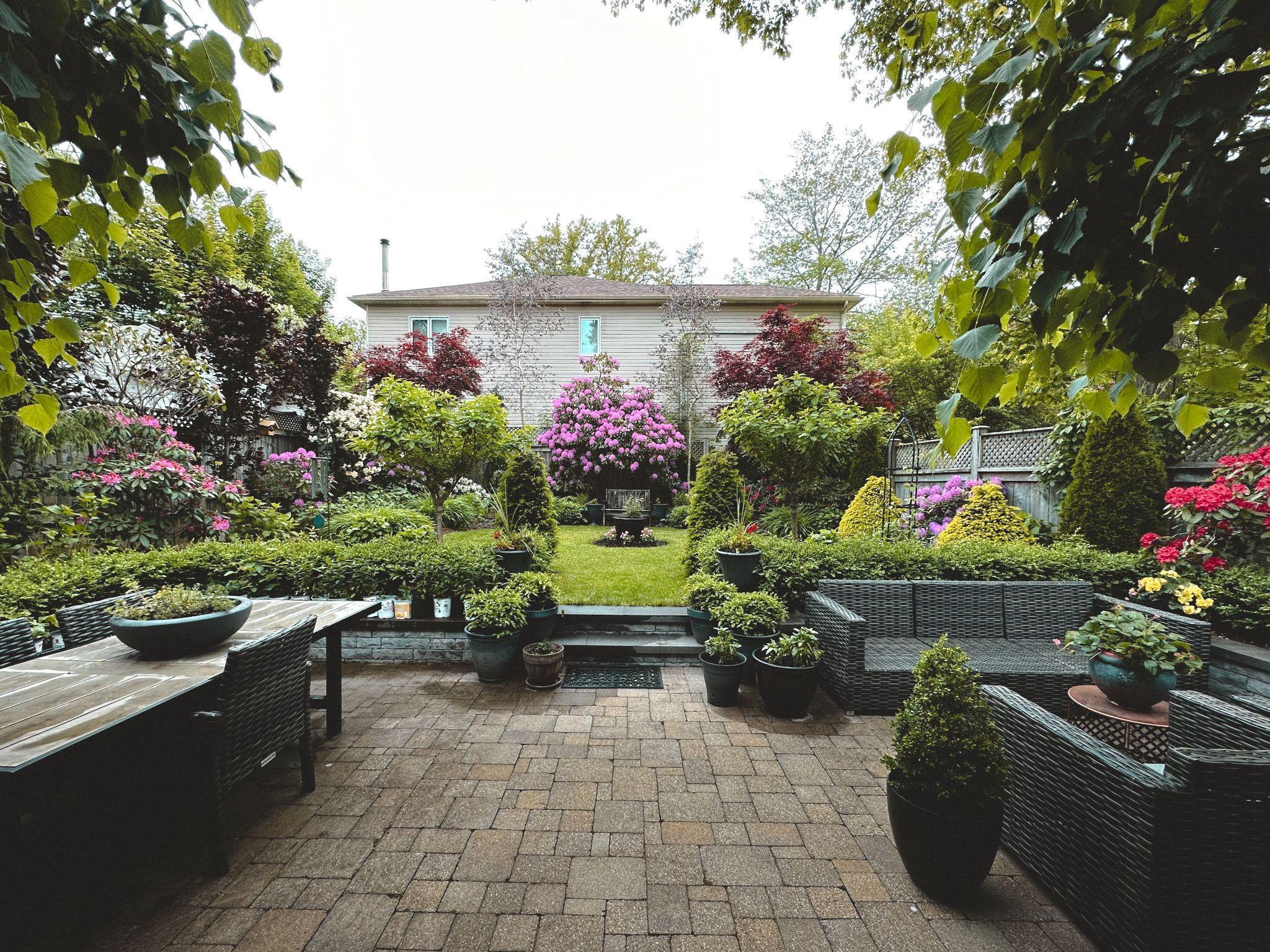
Natural forests don’t have neat, single-level plantings. They stack — canopy trees, understory trees, shrubs, herbaceous plants, ground covers, and mosses all exist in different vertical zones. You can absolutely replicate this layering approach in a small yard, scaled down to suit the space.
Here’s a simplified version for a small shady residential yard:
Layer 1 — Canopy (If Applicable):
If you already have a mature tree (oak, maple, birch), it’s doing this job for you. Don’t fight it; work under it.
Layer 2 — Understory / Mid-Level Shrubs:
Native options like native azaleas, spicebush (Lindera benzoin), or itea (Itea virginica, which absolutely glows with fall color) fill this zone beautifully. Keep height in proportion to your fence or house — in a small yard, a 6-foot shrub can quickly feel like a wall.
Layer 3 — Herbaceous Perennials:
This is where you get to have fun with texture and seasonal color. Native bleeding heart, wild columbine (Aquilegia canadensis), and black cohosh are all strong performers in shade. They die back in winter, which is fine — that’s part of the seasonal rhythm that makes a native garden feel alive rather than static.
Layer 4 — Ground Cover and Moss:
Let native mosses establish where they want to — they’re an ecological asset, not a sign of neglect. Supplement with low creeping natives where you want more coverage.
If you want a deep-dive into which specific plants perform best in humid, shady conditions, this guide to shade-adapted native plants for humid climates is exactly the kind of plant-level detail that takes your design from concept to reality. It covers species selection, bloom times, and layering companions that actually work together — an essential read before finalizing your plant list.
Low-Maintenance Paths: Materials That Actually Belong in a Shaded Garden
Paths in a shaded yard have to deal with a few extra challenges: moss growth, occasional dampness, leaf accumulation, and lower visibility. The wrong material becomes a slippery, high-maintenance headache. The right one practically takes care of itself.
Decomposed Granite and Gravel:
Works well in drier shade zones and has a naturalistic look that pairs beautifully with native plantings. The downside is that leaves can mix in and create a matted mess if you’re under a heavy canopy.
Stepping Stones With Ground Cover Between:
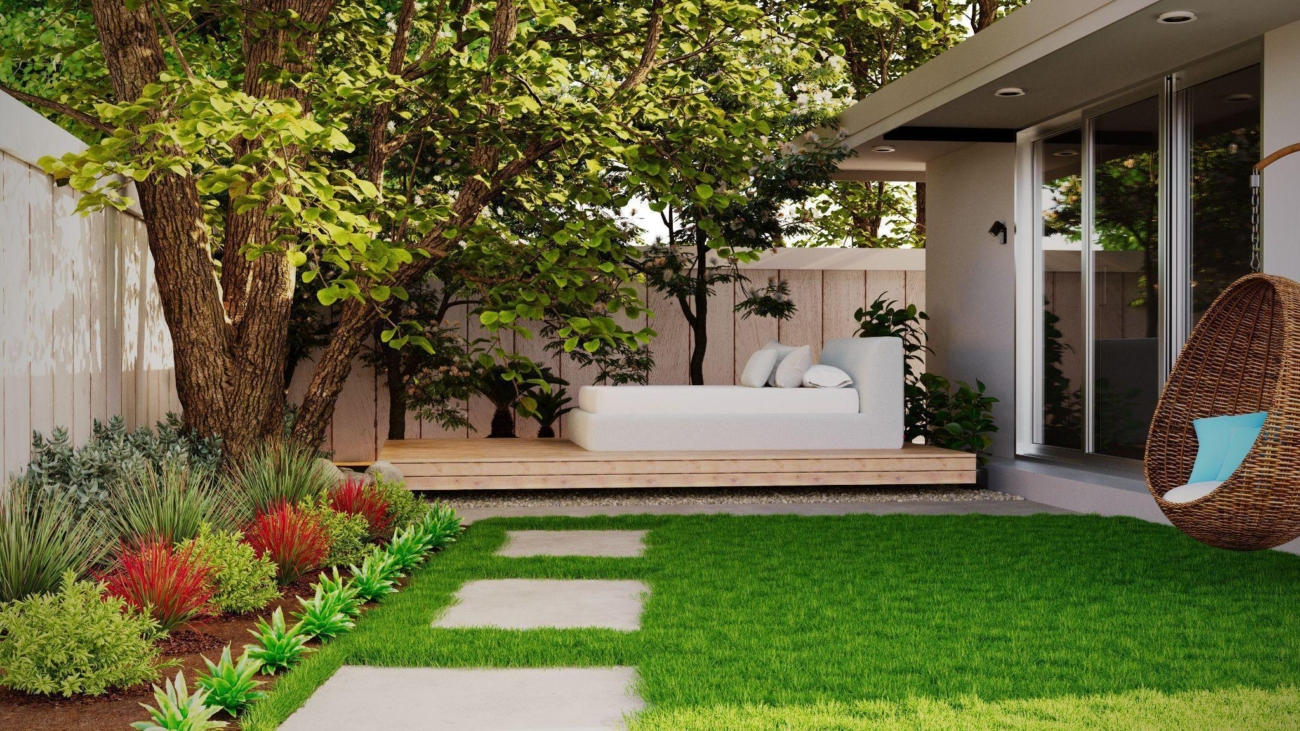
One of the best options for small shaded yards. Use irregular flagstone or large stepping stones, and let low native ground cover (or moss) fill the gaps. This approach is permeable, soft-looking, and feels completely at home in a woodland-style garden.
Shredded Bark or Wood Chip Paths:
Highly recommended for deeply shaded areas. It’s soft underfoot, biodegrades over time (adding organic matter to soil), suppresses weeds, and looks like it belongs in the environment you’re creating. Replenish every year or two, and you’re done.
What to Avoid:
Smooth concrete and polished stone become genuinely dangerous when wet and shaded. If you must use hardscape, choose textured or tumbled surfaces.
Keep paths curving rather than straight. A curved path through a small space creates a sense of journey and makes the yard feel bigger than it is.
The Maintenance Reality (It’s Better Than You Think)
Here’s the honest pitch for native plant landscaping: the first year asks something of you. You’ll water while plants establish, pull weeds before ground covers fill in, and maybe rethink a placement or two. But by year two or three, something shifts.
Around 67% of homeowners now express a preference for native plants in their landscapes — and based on industry satisfaction data, it’s not hard to see why. Once established, native plants largely look after themselves. No deadheading required for most, no fungicide sprays, no aggressive fertilizer schedules. The layered structure you’ve built creates its own leaf litter mulch over time, which feeds the soil and suppresses weeds. The plants, in short, start doing the maintenance for you.
Native landscaping has also been shown to cut pesticide use by roughly 80% compared to conventional approaches — a statistic that should resonate with anyone who’s ever reluctantly reached for a spray bottle in a yard where kids or pets are playing.
This is what “low maintenance” actually means in a native garden: not no work, but less work in all the right places.
Putting It All Together: A Simple Small-Yard Design Checklist
Before you order a single plant, run through this:
- Map your shade zones — document actual sun hours across different spots in the yard.
- Identify your soil — shaded yards often have compacted soil or heavy root competition. Amend with compost before planting.
- Pick your path material — decide early, because paths define the structure everything else grows around.
- Choose your anchor plant — one dominant shrub or fern mass that gives the design its backbone.
- Layer in threes — think shrub layer, perennial layer, ground cover layer. Even in a tiny space, this depth is what makes the design feel intentional.
- Allow for moss — seriously, stop treating it as a problem. It’s a native ground cover that costs you nothing.
- Plant in odd-numbered groupings — threes and fives of the same plant look natural; single specimens of everything looks like a collection, not a garden.
A small shady yard is, in many ways, easier to get right than a large sunny one. The plant palette is focused, the design principles are clear, and once native plants get established, the garden starts to run itself. What once felt like a landscaping liability has a way of becoming the most distinctive — and most beloved — corner of your property.