
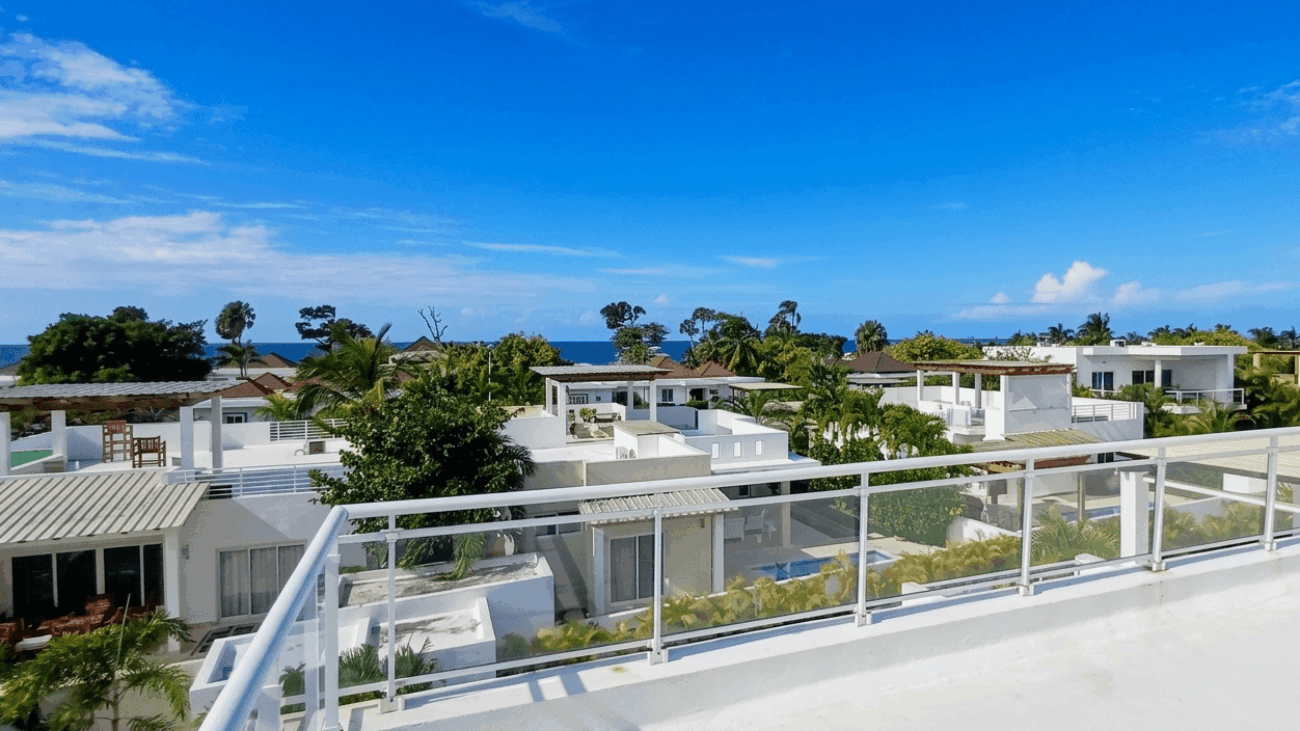
The Caribbean attracts a lot of attention from international buyers, and not just for holidays. More and more people are asking a different kind of question: can this region also make sense as a long-term investment?
The honest answer is it depends on where you look, what your goals are, and how carefully you approach the process.
To make this concrete, let’s use the North Coast of the Dominican Republic, around Puerto Plata, Sosúa, and Cabarete, as a working example. It’s a market that combines accessible entry prices, real tourism demand, and improving infrastructure.
More importantly, it illustrates the kind of thinking you can apply to almost any international property market.
Start with the right questions, not the marketing
One of the most common mistakes international buyers make is evaluating a market based on promotional materials rather than fundamentals. Glossy brochures and promises of “high yields” are easy to produce. What’s harder to find and more valuable is a clear picture of actual demand, realistic risk, and a viable exit strategy.
When you look at the Dominican North Coast through that lens, a few things stand out. Entry prices are still mid-range compared to more established Caribbean destinations, where values have already doubled or tripled.
Demand comes from multiple groups, tourists, expats, digital nomads, and retirees, which reduces dependence on any single market segment. And the legal framework for foreign buyers is relatively clear, though it still requires proper due diligence and local legal support.
None of this guarantees strong returns. But it does create the conditions where an informed buyer can make a reasoned decision, rather than a purely speculative one.
Two different investment profiles: Sosúa and Cabarete
Within the same stretch of coastline, you’ll find two towns that represent quite different approaches, a useful illustration of how location shapes the investment case even within a small region.
Sosúa has been a destination for expats and retirees for decades. That history has created a stable, service-rich environment with established gated communities, international schools, clinics, and a rental market oriented toward long-term stays.
Properties here tend to be part of larger residential developments with shared amenities, pools, clubhouses, and 24-hour security, which reduces management complexity for owners who aren’t based locally.
Cabarete has a different character. Known for kitesurfing and an active beach scene, it has built a loyal following among younger expats and the digital nomad community. That creates consistent short-term rental demand, especially for well-located beachfront properties. Inventory in the best spots is limited, which supports resale value, but it also means buyers need to be selective.
Both towns illustrate how two neighboring areas can serve different investor profiles. The key is being clear about your own goals before you start comparing properties.
What to look for in any international market
You don’t have to be focused on the Dominican Republic for this framework to be useful. Before committing to any international property, it helps to work through a few consistent questions:
What is driving demand? Tourism, expat relocation, remote work trends? The more diverse and durable the demand drivers are, the lower the overall risk of vacancy.
How accessible is the location? The North Coast benefits from two international airports nearby. In your target market, consider how easy it is for guests and for you to get there regularly.
What does the regulatory environment look like? The Dominican Republic has a specific incentive program (CONFOTUR) that can offer tax benefits for qualifying tourism-related projects. Every country has its own framework, and understanding it early can significantly affect your net returns.
What are the ongoing costs? HOA fees, property management, and routine maintenance can all add up. Factor these into your yield calculations, not just the gross rental income.
Is there a clear exit strategy? Understand the resale market before you commit; some markets are easy to enter but surprisingly difficult to exit, particularly where the buyer pool is narrow or the secondary market is thin.
Why working with a local specialist matters
International property transactions add layers of complexity that don’t exist in your home market: different legal systems, local financing conditions, currency considerations, and management logistics.
Even in a relatively buyer-friendly market like the Dominican Republic, having an experienced local consultant makes a significant difference. Not just in finding the right property, but in structuring the acquisition correctly, understanding the full tax implications, and making sure your expectations about rental income are grounded in local market reality rather than developer projections.
If you’re exploring the North Coast specifically, a good starting point is Century 21 Perdomo, a local agency with solid experience working with international buyers across the Puerto Plata, Sosúa, and Cabarete markets. They can help you structure the process properly, from initial evaluation through to acquisition and beyond.