

Highlights:
- Low-VOC and zero-VOC paints are going mainstream fast — the global market is hitting $3.3B in 2026 at 8.4% CAGR — making certified, affordable options more accessible than ever for every room.
- Embodied carbon in countertops varies by nearly fourfold within the same product family depending on recycled content, making product-specific EPDs essential rather than optional when specifying surfaces.
- Flooring is where embodied carbon accumulates fastest at scale — materials like linoleum, HempWood, bamboo, and cork dramatically outperform standard vinyl plank across every sustainability metric.
- Asking for Environmental Product Declarations (EPDs) is the single most powerful habit a homeowner or renovator can develop — it replaces vague category claims with verified, product-specific carbon numbers.
- Low-carbon finishes no longer require a performance or aesthetic trade-off — the 2026 market has caught up, and the best options are now competitively priced, beautiful, and certified.
You’ve probably already swapped out your lightbulbs, maybe installed a programmable thermostat, and started composting. But here’s what most guides don’t talk about: the walls, floors, and surfaces inside your home are quietly contributing to your carbon footprint too — both during manufacturing and long after they’re installed. The good news? In 2026, the market for low-carbon finishes has never been stronger, and the options have never been more practical, beautiful, or affordable.
Let’s break it all down by surface type, backed by real data, so you can make smarter choices room by room.
Why Your Finishes Have a Carbon Story
Every material in your home has what’s called an “embodied carbon” footprint — the emissions generated during extraction, manufacturing, and transportation before anything ever gets installed. Add in the off-gassing that happens post-installation, and suddenly your choice of countertop or wall paint starts to look a lot less neutral.
The good news is that the industry has responded. Manufacturers are reformulating paints, rethinking flooring substrates, and sourcing recycled materials for countertops at an unprecedented pace. If you’re planning any kind of renovation — big or small — this is the perfect moment to align your material selections with your sustainability goals. For a broader overview of which categories of materials offer the deepest emissions cuts across your whole project, the 2026 guide to eco-conscious home renovation materials is a solid starting point that contextualizes everything we’re covering here.
The Paint Revolution: Low-VOC Is Going Mainstream Fast
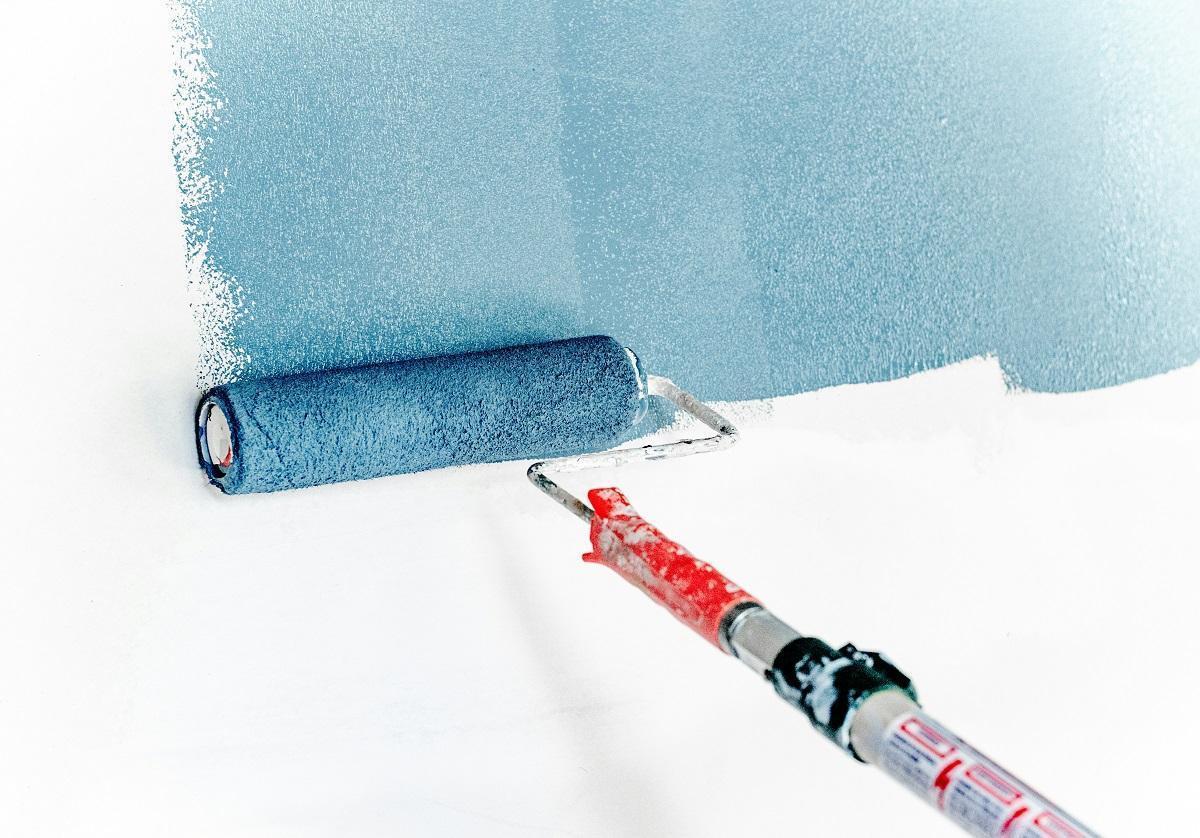
Paint might seem like a minor decision — it’s just color, right? But conventional paints release volatile organic compounds (VOCs) into the air for weeks or even months after you brush them on. According to the EPA, indoor VOC concentrations can run two to five times higher than outdoor levels, and a freshly painted room can surge to 1,000 times background levels for several hours immediately after application.
That’s not just a climate issue. It’s an indoor air quality issue that affects your family directly.
But here’s the data point that really signals where things are heading: the global low-VOC paint market is projected to expand from $3.04 billion in 2025 to $3.3 billion this year, growing at a compound annual growth rate of 8.4%, according to The Business Research Company’s 2026 market report. That kind of growth doesn’t happen in a vacuum — it’s being driven by stricter environmental regulations, rising demand for green building certifications, and a consumer base that is now actively reading labels.
What does this mean practically? It means you have more certified options than ever before, at more accessible price points. Look for paints certified to GreenGuard Gold or Green Seal GS-11 standards — both require third-party verification of low-VOC formulations and ban outright certain carcinogens and reproductive toxins regardless of emissions levels.
When shopping, know your numbers. Low-VOC paints contain less than 50 grams per liter (g/L) of VOCs. Zero-VOC formulations run below 5 g/L. For nurseries, bedrooms, or any space where young children spend extended time, zero-VOC is the call, full stop.
Brands like Benjamin Moore Natura and Sherwin-Williams Harmony have long led this category, and in early 2026 Sherwin-Williams expanded its bio-based zero-VOC interior coating lines further — another signal that the market is responding to demand, not just regulation.
Pro tip: Even zero-VOC base paints can spike when colorants are added at the store. Ask your supplier specifically about the VOC content of the tinted final product, not just the base.
Flooring: Where Carbon Footprints Get Serious
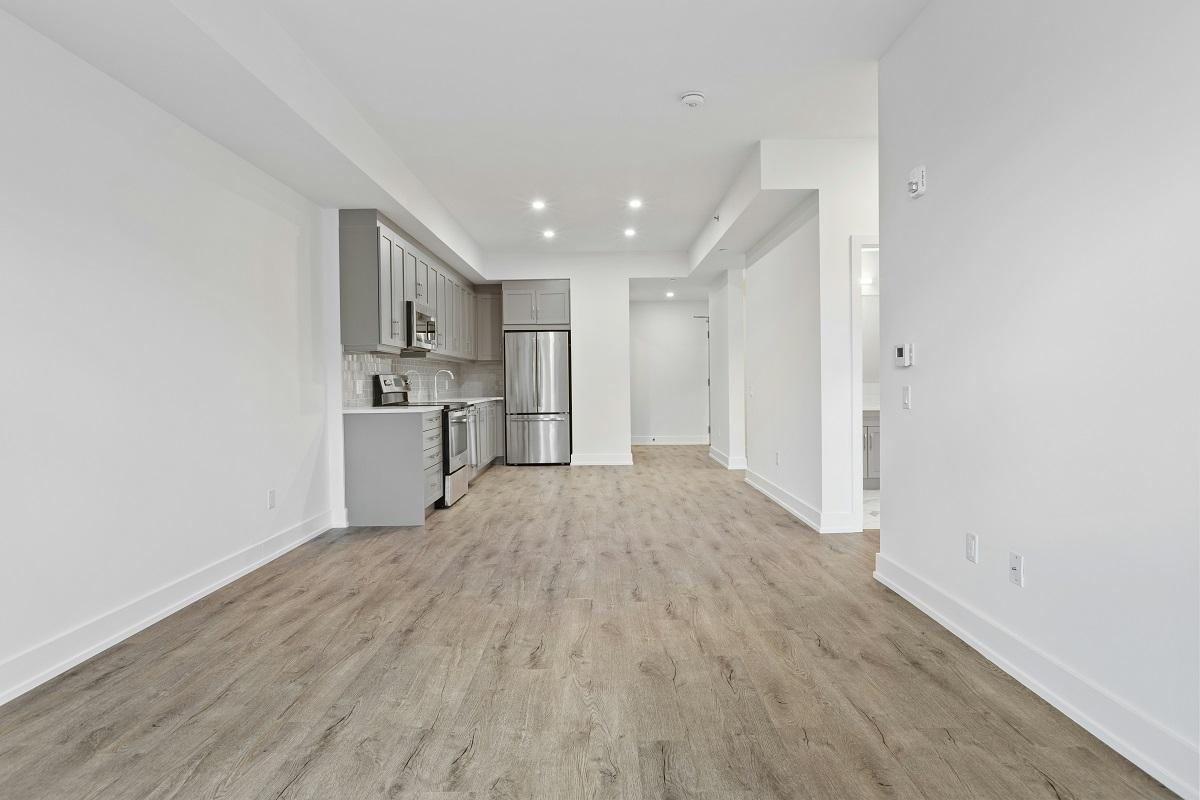
Flooring is where embodied carbon really starts to add up. You’re covering hundreds of square feet, and the material choice — from virgin vinyl to bamboo to recycled-content tile — makes an enormous difference in the lifecycle emissions of that surface.
The low-carbon flooring category is now a serious market segment in its own right. Linoleum, for example, has made a major comeback not as a retro curiosity but as a genuinely compelling low-carbon option. Products like Tarkett’s Veneto line are certified Cradle to Cradle, with materials designed to either safely return to nature or be recaptured in industrial cycles. One standout linoleum product from Duracryl International reports that 78% of its materials are sourced from rapidly renewable resources, with VOC emissions below 10 micrograms per cubic meter — a figure that puts it well ahead of most synthetic alternatives.
For homeowners drawn to hardwood aesthetics, HempWood is an option that’s genuinely hard to beat on environmental grounds. It’s the only flooring material that is simultaneously zero-VOC, free of added formaldehyde, carbon-negative in lifecycle, and harder than most traditional hardwoods — the latter measured at a Janka hardness of 2,200 lbf, which exceeds red oak and hickory. The carbon-negative status comes from hemp’s extraordinary CO₂ sequestration rate per acre during cultivation.
Bamboo flooring is another high-performer when sourced from certified suppliers. It regrows in three to five years versus 20 to 80 for hardwoods, and its embodied carbon is a fraction of virgin hardwood or standard vinyl plank.
What to avoid? Traditional vinyl plank (LVP) is the category that quietly dominates renovation sales but carries one of the worst lifecycle profiles. It’s petroleum-derived, difficult to recycle, and often contains phthalates and other plasticizers that off-gas over time. If you’ve been drawn to LVP for its durability and water resistance, consider rigid-core options made with partially recycled content — they exist, and they’re improving fast.
One actionable step: Ask any flooring vendor for the product’s Environmental Product Declaration (EPD). A Type III EPD is a standardized, third-party-verified document that shows you actual carbon numbers for a specific product — not just general category claims. If a vendor can’t produce one, that tells you something.
Countertops: The Surprisingly Complex Carbon Equation
Countertops are where embodied carbon gets both complex and interesting. The material you choose for your kitchen or bathroom surface carries emissions from mining or manufacturing, transport, fabrication, and eventually disposal — and the range is dramatic.
Engineered quartz has dominated kitchen design for the past decade, and for good reason: it’s durable, non-porous, and stunning. But its carbon profile is heavy, particularly for high-silica formulations with low recycled content. A recent EPD for DuPont’s solid surface material illustrates just how much variance exists even within a single product family: Global Warming Potential values range from 28.5 to 101 kg CO₂-equivalent per square meter depending on thickness and recycled content percentage, which runs from 0% to 20%. That spread — nearly fourfold — is a powerful reminder that demanding specific product-level EPD data matters enormously, not just a general material category claim.
For the most dramatically lower-carbon countertop options, look at:
- Recycled glass surfaces — made from post-consumer glass embedded in cement or resin binders. The glass fraction can be 85-100% recycled, and some formulations use low-carbon binders.
- Reclaimed wood — naturally low embodied carbon, carbon-storing, and uniquely beautiful. Not ideal for wet areas without proper sealing.
- Fly ash concrete — traditional concrete gets a bad carbon rap (cement production is emissions-intensive), but fly ash is an industrial byproduct that replaces a significant portion of cement clinker. The result is a countertop with substantially lower embodied carbon than standard poured concrete.
- Paper composite — yes, paper. Brands like Richlite and PaperStone make dense, beautiful slabs from recycled paper and non-petroleum resin binders. They’re FSC-certified, low-emission, and more durable than they sound.
California’s updated 2026 CALGreen embodied carbon requirements are pushing commercial specifiers to demand verified EPDs for all major surfaces including countertops. Even if you’re a residential homeowner not subject to those regulations, using the same rigorous approach — asking for product-specific Global Warming Potential data — puts you ahead of the curve.
Putting It All Together: A Room-by-Room Framework
The good news about low-carbon finishes is that the principle scales. You don’t have to overhaul everything at once.
- Kitchen: Swap high-silica quartz for a recycled glass or fly ash concrete countertop. Use zero-VOC paint for walls. If replacing floors, linoleum or bamboo outperforms vinyl in every sustainability metric.
- Bedroom: This is where air quality matters most given sleep hours. Zero-VOC paint is non-negotiable. Cork or HempWood flooring for low emissions and comfort underfoot.
- Bathroom: Recycled glass tile for backsplashes or shower surrounds. Low-VOC paint formulated for moisture resistance (these exist and are certified). Reclaimed wood vanity tops with marine-grade sealant.
- Living areas: This is where flooring choices have the biggest square footage impact. Linoleum, cork, bamboo, or responsibly sourced solid hardwood all dramatically outperform standard LVP on carbon terms.
Final Thoughts
Cutting emissions from your home’s finishes doesn’t require sacrifice — it requires information. The markets for low-VOC paint, low-carbon flooring, and lower-embodied-carbon countertops are all growing rapidly because the products have genuinely improved. They perform better, look better, and increasingly cost comparably to their high-emission alternatives.
The key habits: ask for EPDs, look for GreenGuard Gold and Green Seal certifications on paints, choose rapidly renewable or high-recycled-content flooring, and specify countertops by their actual Global Warming Potential numbers rather than general category assumptions.
Your home’s finishes are one of the highest-leverage opportunities in a renovation — and with the options available in 2026, there’s no longer a meaningful trade-off between beautiful and low-carbon.