
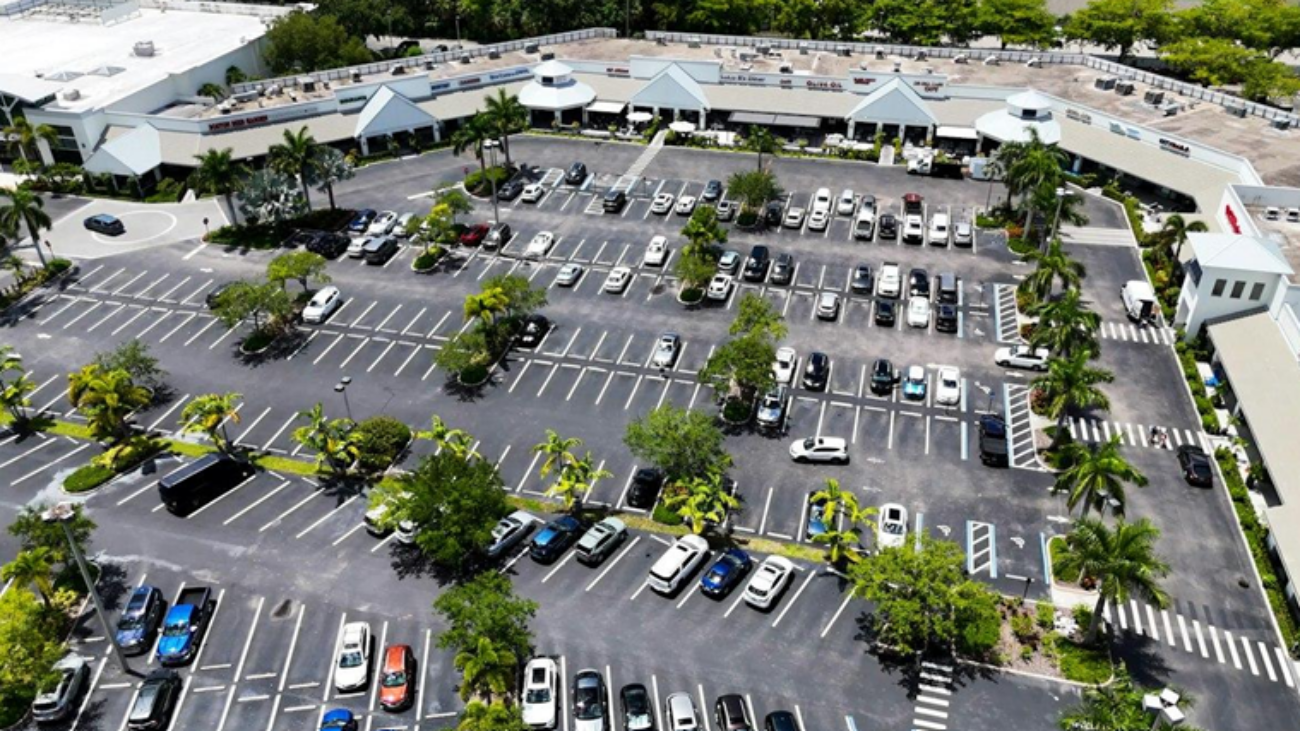
Across American cities, Class B office buildings are going dark. Municipal buildings designed for another era sit underused. Parking lots cover blocks in neighborhoods where every square foot of land is expensive. To Will Blodgett, the founder and CEO of Tredway, those sites represent one of the least-used resources in the fight over housing costs.
“Publicly owned real estate portfolios are one of the greatest untapped assets in both states and cities,” Blodgett wrote in a Sept. 24 op-ed for Commercial Observer.
The argument is part of a broader case in the piece for public-private partnership as the most practical way to close the country’s housing gap. It deserves a closer look, because it addresses the cost that most often keeps affordable housing out of high-opportunity neighborhoods: the land itself.
The size of the gap
The shortage is large by any measure. Blodgett cited U.S. Chamber of Commerce figures showing the country remains 4.7 million homes short, and noted that nearly a third of households are cost-burdened. Census data point the same way. According to the 2024 American Community Survey, roughly half of renter households spend more than 30 percent of their income on rent, and about a quarter spend more than half. The country had about 44.1 million renter households in 2024, the most on record.
At the same time, the supply of existing affordable homes has been shrinking. Harvard’s Joint Center for Housing Studies estimates that roughly seven million affordable rental homes have disappeared nationwide since 2014.
Those two trends pull against each other. Demand is growing while the stock of homes that working families can afford is shrinking, and new construction is slow and expensive to deliver.
Why land matters
In many cities, the price of land decides what gets built. A developer buying a site in a high-cost neighborhood has to recover that expense through rents, which makes deeply affordable housing hard to finance without substantial subsidy. The land cost can sink a project before the first design is drawn.
Public ownership changes that equation. When a city or state already holds the site, the acquisition cost that would otherwise drive rents upward can be reduced or removed. Blodgett’s point is that governments hold far more real estate than most residents realize, and much of it isn’t being used well.
He described what agencies can do once they treat those holdings as housing sites. Through long-term ground leases or outright sales, the public sector gains leverage to advance its policy goals. “In their capacity as landlord, agencies can request project bids that meet certain requirements and incorporate public benefits such as health care facilities and libraries while also setting affordability bands,” Blodgett wrote.
That control is what separates a public-land deal from a standard private development. The government sets the terms: how many homes must be affordable, at what income levels, and what community facilities come with them. Private partners then compete to deliver the project within those terms.
“These projects are ripe for public-private partnership,” he wrote.
New York as a test case
The idea is already playing out in New York City. Earlier this month, President Donald Trump and Mayor ZohranMamdani discussed a proposal for Sunnyside Yard in Queens, a massive rail yard site that could hold 12,000 homes, half funded through the state’s Mitchell-Lama affordable housing program, along with parks and schools, Commercial Observer reported. The plan was first pitched under former Mayor Bill de Blasio.
Projects of that scale are planned and built over many years. Blodgett’s proposal is more incremental. He suggested that cities scan their inventories for vacant land and underused properties, and wrote that doing so “can yield amazing results,” especially in neighborhoods with high land costs.
Where preservation fits
Public land is primarily a tool for new construction, and Blodgett’s firm works mostly on the other side of the equation. Tredway, a national affordable and workforce housing investment and development firm, focuses on buying existing affordable properties, renovating them, and extending their affordability for decades. In the op-ed, Blodgett wrote that the firm is on track to own approximately 20,000 apartments across more than 35 states by the end of the year, with the vast majority focused on preservation rather than ground-up development. The firm also has more than 2,000 homes in active ground-up development.
His argument treats the two approaches as complements. Preservation protects the homes that already exist, and it relies on the same financing architecture of tax credits, tax-exempt bonds, and local incentives. Public land makes new affordable construction feasible in places where land prices would otherwise rule it out. A city that pursues both can slow the loss of affordable homes while adding new ones in neighborhoods with good transit, jobs, and schools.
Tredway’s recent acquisitions show what preservation can accomplish on its own terms. In 2025, the firm was ranked the 10th most active developer in acquiring and preserving affordable housing by Affordable Housing Finance. Its Texas portfolio, acquired this year, includes 16 properties and more than 1,200 apartments, with more than $10 million in capital improvements and extended long-term affordability for all residents.
The partnership requirement
Every piece of this depends on cooperation between government and private firms. Blodgett was direct about the limits of each. Public housing authorities often struggle to keep pace with repairs, modernization, and expansion under the structural constraints they face, he wrote, and private capital, left to market forces, isn’t designed to keep homes affordable indefinitely.
“The public sector, guided by its policy goals, must harness private sector expertise and collaborate on mission-aligned development,” he wrote.
For cities sitting on underused property, the first step is an inventory: identifying which sites are vacant, which buildings no longer serve their purpose, and which parcels sit in neighborhoods where housing is most needed. The second is putting the best of them out to bid, with affordability written into the terms from the start.