
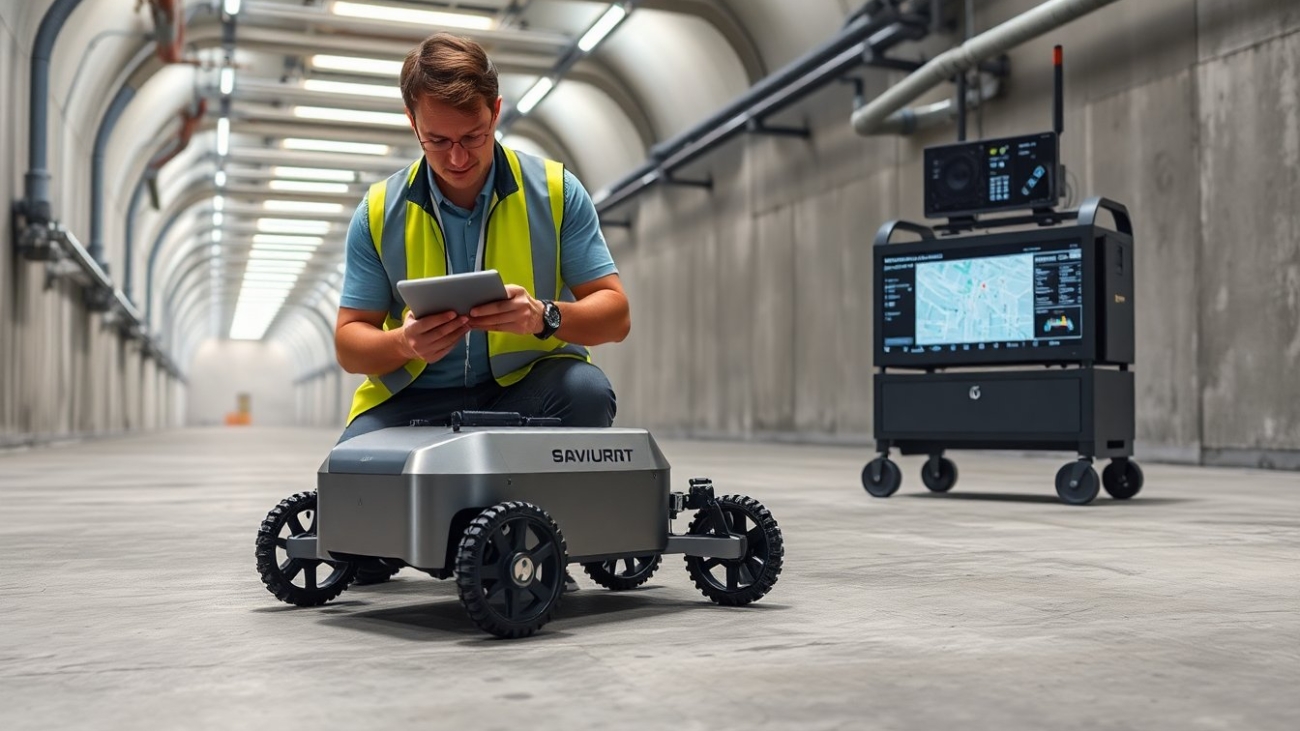
savannah rat robot drone ohusrla appears in news and research in 2026. It acts as a small, agile inspection platform. Engineers build it for tight spaces and rapid mapping. Organizations test it for infrastructure checks, wildlife study, and search tasks. This article explains what savannah rat robot drone ohusrla is and how it works in clear, direct terms.
Key Takeaways
- The savannah rat robot drone Ohusrla is a compact, ground-moving inspection platform designed for tight spaces and rapid mapping.
- Its advanced sensors, including stereo cameras and lidar, provide accurate local mapping and obstacle avoidance within confined environments.
- Ohusrla’s modular design and swappable batteries enable quick maintenance and extended mission times of up to 90 minutes.
- Organizations deploy the Ohusrla for infrastructure inspection, emergency response, wildlife study, and access to areas inaccessible to larger robots.
- Safety protocols include encrypted data transmission, restricted access zones, operator certification, and compliance with privacy and regulatory standards.
- The affordable price and ease of use promote frequent inspections, enhancing preventive maintenance and reducing costly emergency repairs.
What The Savannah Rat Robot Drone (Ohusrla) Actually Is
savannah rat robot drone ohusrla refers to a compact robotic drone that moves on ground and climbs low obstacles. Researchers and companies design it to inspect narrow passages and uneven terrain. It weighs under two kilograms and packs a modular sensor suite. It uses low-power processors and efficient actuators. It connects wirelessly to a control station and streams real-time data. Teams deploy it where larger robots cannot fit. They use it for tight-crawl inspections, rapid entry checks, and short-range scouting. The form and controls prioritize stability and simple maintenance. Users replace modules in the field with basic tools. Developers publish firmware updates to add features and fix bugs. The open documentation makes integration with other systems easier. The form factor and price point aim to lower barriers for routine use.
Design, Sensors, And Mobility: How Ohusrla Works
savannah rat robot drone ohusrla mixes a low center of gravity with flexible wheels and legs. The frame uses aluminum and polymer parts to balance strength and weight. Engineers place cameras, lidar, and microphones around the hull. The sensor layout gives broad coverage with minimal blind spots. The control software fuses sensor data to build local maps. It runs mapping and obstacle avoidance on-board to reduce latency. It compresses video and sends key frames to the operator. The power system uses swappable battery packs. A single pack gives 45 to 90 minutes of mission time depending on speed and sensor use. Charging docks return batteries to service quickly. The mechanical design lets Ohusrla traverse rubble, climb small steps, and squeeze through openings as narrow as twenty centimeters. The body seals protect electronics from dust and light moisture. The user interface shows battery state, map progress, and alerts in clear panels. Operators adjust speed and sensor focus with simple controls. Maintenance checks follow a short checklist that a single technician can complete in minutes.
Key Technical Features And Performance Specifications
savannah rat robot drone ohusrla includes stereo camera pairs that capture 60 frames per second. It mounts a compact lidar with a 15-meter effective range. It carries an inertial measurement unit for stable pose estimation. The CPU module uses a quad-core ARM processor with a dedicated neural accelerator for object detection. The wireless link supports encrypted telemetry over 2.4 GHz and 5 GHz bands. The chassis measures roughly 30 cm by 18 cm by 12 cm. The maximum speed reaches 3 meters per second on flat ground. The payload capacity sits near 0.5 kilograms. The battery chemistry uses lithium-iron phosphate cells for predictable discharge and longer cycle life. The robot supports payloads such as chemical sensors or extra cameras. The firmware exposes an API that lets teams add custom tasks. Manufacturers publish calibration tools and test suites. Field tests report a median mapping accuracy within 8 centimeters for typical indoor runs. The rated operational temperature range covers -10°C to 45°C.
Practical Applications: Where Organizations Deploy Ohusrla
savannah rat robot drone ohusrla finds use in infrastructure inspection and emergency response. Utility companies send it into confined service tunnels and valve chambers. It inspects welds, measures corrosion, and records defects without human entry. Fire departments deploy it to scout collapsed buildings and identify survivors. Environmental teams use it to observe small animal burrows and low vegetation zones with minimal disturbance. Security teams adapt it for perimeter checks in areas with tight gaps. Construction crews use it to verify underfloor work and reach blocked crawlspaces. Researchers use it to test new sensor packages and autonomy routines. Museums and conservators use it to inspect fragile historic structures that human technicians risk damaging. The small size and low cost let organizations run frequent checks rather than rare, high-cost inspections. That increases preventive maintenance and reduces emergency repairs.
Safety, Privacy, And Regulatory Considerations For Deployment
savannah rat robot drone ohusrla raises safety and privacy questions that teams must address. Operators prepare safety plans and restrict access during missions. They program no-go zones into the control software to limit where the robot may enter. Teams use encrypted channels and update keys regularly to protect data. Organizations obtain permission before deploying the drone in private property or sensitive sites. Regulators review electronic surveillance rules that can apply to ground drones. Manufacturers add physical kill switches and clear labeling to meet product safety standards. They provide training materials and require operator certification for high-risk use. Auditors request logs and access records to verify compliance. Independent testing labs evaluate electromagnetic emissions and mechanical safety. Stakeholders document risk assessments and retention policies for recordings. These steps reduce legal exposure and increase public trust.