
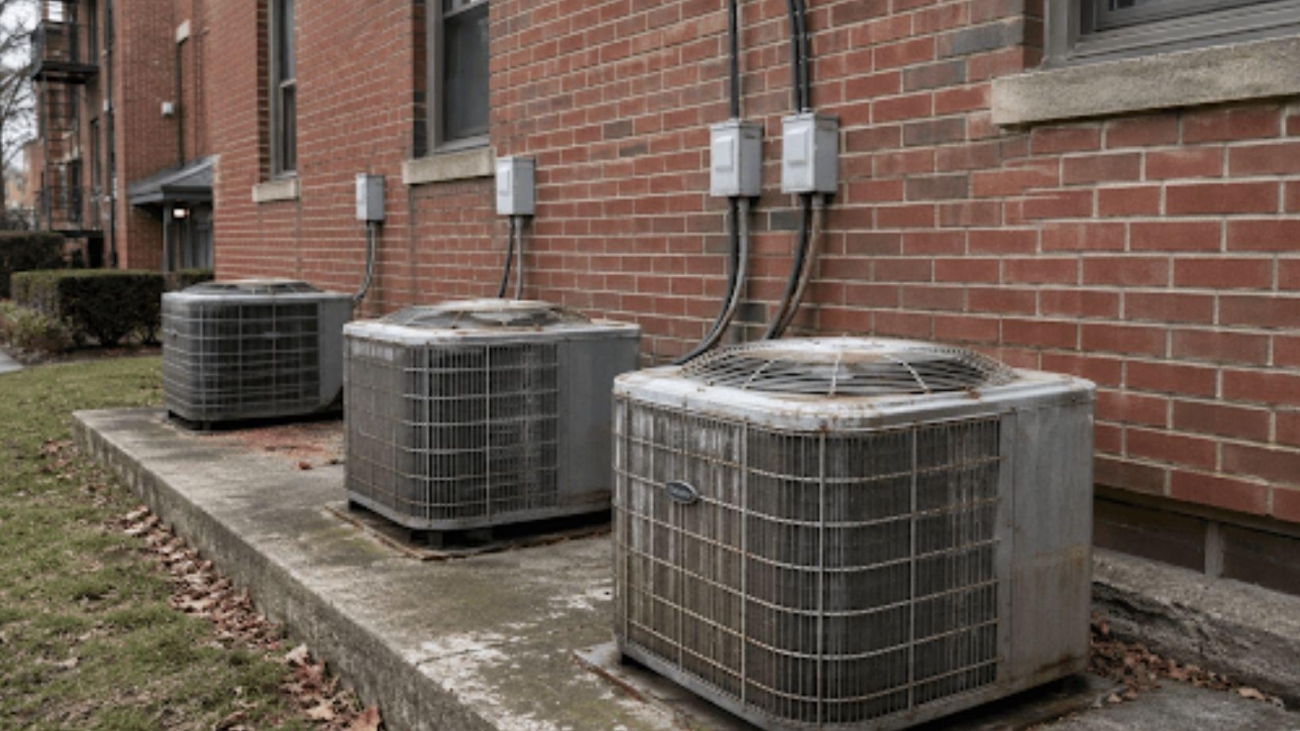
Heating and cooling equipment often fails during the first real heat wave of July, or the first hard freeze in January. That timing is the nature of the equipment. Systems break down when they are working hardest, which is exactly when every supplier and every contractor in the region is busiest. Owners who treat HVAC as an emergency line item pay for it twice. Owners who treat it as a planned capital item usually do not.
What a Reactive Replacement Actually Costs
When a system dies unexpectedly, the owner absorbs several costs at once:
None of those costs appear in a budget until the day they arrive. All of them are avoidable with a plan.
Start With an Equipment Inventory
Most small portfolios do not have one. It is the single highest value hour an owner can spend. For every property, record:
The serial number matters more than people expect. Most manufacturers encode the build date in it, which tells you the real age of a unit even when the seller could not. Once you have that list, you can stop guessing about which building is going to surprise you next.
Know When Equipment Is Getting Close
Age alone does not mean a system needs to go. It does tell you when to start watching. ENERGY STAR suggests considering replacement of air conditioners and heat pumps after about ten years, and furnaces and boilers after about fifteen. That is a planning signal, not a deadline. The stronger signals show up in your own records:
When two or three of these show up together on a unit that is already past its expected life, that unit belongs on next year’s budget rather than next year’s emergency list.
Budget on a Schedule Instead of a Surprise
Once the inventory is sorted by age and condition, replacement stops being a shock and becomes a queue. Rank every system by how likely it is to fail in the next two or three years. Put the top of that list into your capital plan.
Set aside reserves against it, then work down the list during the shoulder seasons, in spring and fall, when contractors have availability and you are not competing with everyone else in the market. Replacing a system in April costs less and disrupts less than replacing the same system in July. The equipment is the same. The circumstances are not.
Line Up Supply Before You Need It
Planning only helps if the equipment is actually available when the work is scheduled. Owners and property managers who move on a schedule tend to build a relationship with a regional supplier rather than sourcing each job from scratch.
Working with a local option like E&L HVAC supply gives owners in the Philadelphia area a place to confirm what is available before a job is scheduled, which is the difference between a two day turnaround and a two week one. Knowing where the equipment is coming from is part of the plan, not an afterthought.
Get the Sizing Right While You Have Time
An emergency replacement almost always becomes a like for like swap, because there is no time to do anything else. That is a problem when the original system was wrong to begin with, which is common in older housing stock that has been divided, added onto, or partially insulated over the decades.
The Department of Energy recommends that equipment be sized using an ACCA Manual J load calculation rather than a rule of thumb. Oversized equipment cools quickly, shuts off, and never runs long enough to pull humidity out of the air. The tenant gets a cold, clammy unit and a higher bill, and the compressor wears out early from short cycling. A planned replacement gives you room to have that calculation done. An emergency one does not.
Factor In the Refrigerant Transition
Federal rules under the AIM Act are moving new air conditioning and heat pump equipment toward refrigerants with lower global warming potential. The EPA maintains the current requirements and timelines, and the details have been revised more than once.
For owners, the practical takeaways are simple. Existing systems can keep running and can keep being serviced. New equipment is shifting to different refrigerants, which affects what pairs with what. And a partial replacement on an older system deserves a conversation about whether the remaining components are worth matching to.
Standardize Where You Can
Owners with several units in the same building or across a few properties gain something extra from planning: consistency. Specifying similar equipment across a portfolio simplifies almost everything downstream. Contractors get familiar with the systems. Filters and common parts can be stocked in bulk. Troubleshooting gets faster. When something does fail unexpectedly, you already know exactly what you need. That consistency is only possible when you are choosing equipment on your own timeline.
The Payoff Is Predictability
Planned HVAC replacement will not make the expense go away. Equipment wears out, and it has to be replaced eventually. What planning changes is everything around the expense. Lower cost, because you are buying in the off season with time to compare. Less disruption, because the work is scheduled instead of urgent. Better equipment, because the decision was made with information. Fewer emergency calls and fewer unhappy tenants.
For an owner with one rental or a manager with forty, the exercise is the same. Know what you have, know how old it is, know what is next, and know where it is coming from. The list takes an afternoon. The alternative takes a summer.