
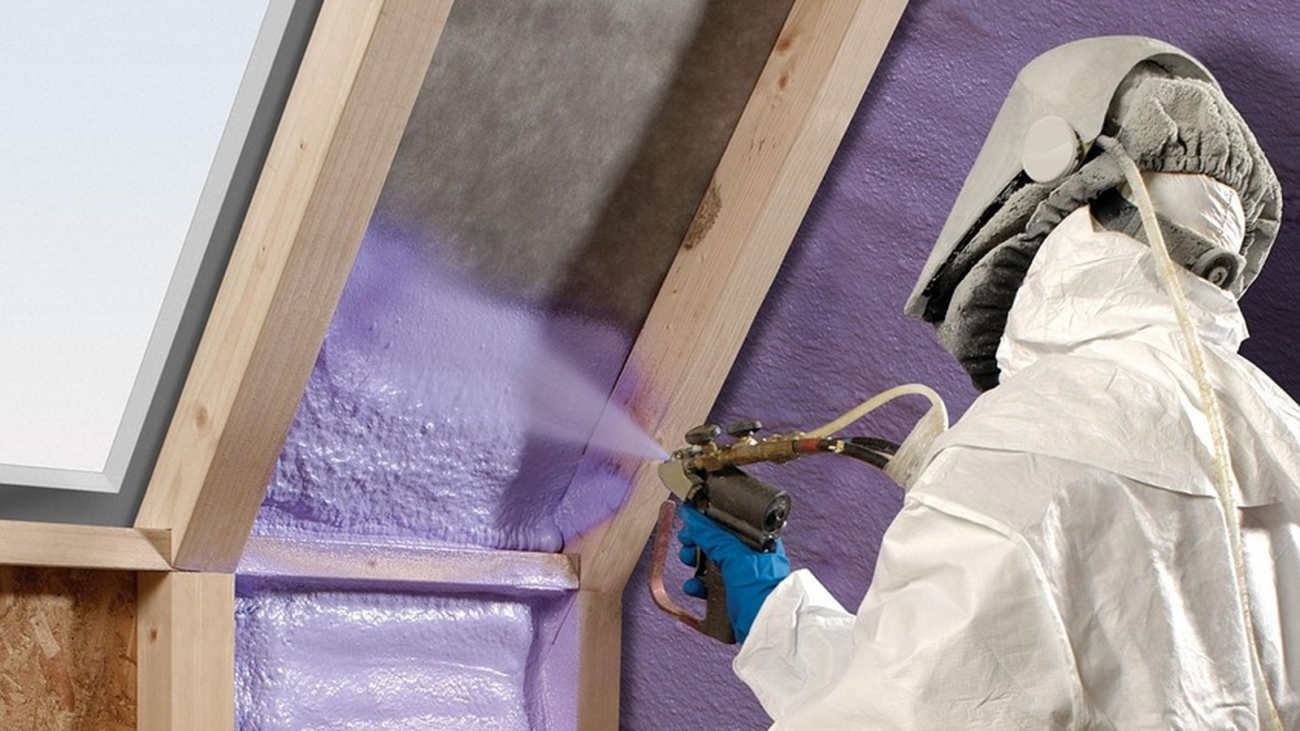
Spray foam works best where stopping air leaks is as important as adding insulation. In Ottawa homes, those areas often include rim joists, foundation walls, narrow cavities, and spaces around pipes or framing connections.
It is not automatically the right choice for every wall or attic. The best results come from using spray foam insulation where its ability to expand, seal gaps, and fit irregular spaces solves a problem that other materials may not handle as neatly.
Why Rim Joists Are a Strong Candidate
Rim joists run around the edge of the floor framing, directly above the foundation. This area contains small joints where wood, concrete, and the subfloor meet, making it a common path for drafts.
Foam can cover the rim joist and seal the surrounding edges in one application. This is often more effective than fitting pieces of batt insulation into each joist bay, especially when the framing is uneven.
Proper rim-joist insulation may help with:
- Cold basement ceilings and floors above
- Drafts near exterior walls
- Condensation on exposed framing
- Air entering around sill plates and joints
Before installation, the contractor should check for water intrusion, damaged wood, and pest activity. Covering an existing problem can make future inspection and repair more difficult.
Where It Helps in Basements
Basements have large surfaces, but they also contain awkward transitions. Foam can be useful along foundation walls, at the top of the wall, and around areas where framing or utilities interrupt a flat surface.
Closed-cell foam is often considered for below-grade locations because it creates a firm, continuous layer and takes up less space than some thicker systems. However, dampness should be corrected first. Insulation is not a substitute for foundation repairs, drainage improvements, or leak control.
Homeowners should also ask how the installation will meet local building and fire-protection requirements. Foam may need an approved protective covering depending on its location and how the space is used.
Hard-to-Reach and Irregular Areas
Older Ottawa houses do not always have simple, evenly spaced cavities. Renovations, additions, stone foundations, plumbing lines, ductwork, and unusual roof connections can leave gaps that are difficult to fill with rigid boards or batts.
Foam may make sense around:
- Plumbing and wiring penetrations
- Foundation-to-framing connections
- Tight crawl spaces
- Narrow wall or ceiling sections
- Cantilevered floors and overhangs
- Complex rooflines with limited access
It must be kept away from heat-producing equipment and areas that require clearances. Electrical concerns, moisture damage, and ventilation needs should be addressed before installation.
When Another Material May Be Better
Spray foam can cost more than fiberglass, cellulose, or rigid board. In large, open spaces with straightforward framing, another product may provide the needed insulation at a lower cost and allow easier future access.
Experienced insulation companies in Ottawa should explain why foam is recommended for each area rather than proposing it everywhere. Ask what problem it will solve, which type will be used, how thick it will be applied, and what preparation or protective finishes are included.