
Thailand’s luxury property market has seen a steady rise in developments marketed as “branded residences.” The term now appears in brochures, agent presentations, and search results, yet many buyers remain unclear on what actually separates a branded residence from a conventional luxury home, and why it often commands a higher price. For high-net-worth buyers evaluating options across Bangkok and its surrounding provinces, understanding the substance behind the label has become part of standard due diligence. This is especially true for buyers with strong ties to both Thailand and China, who often weigh a developer’s regional track record as heavily as the physical product itself. This article breaks down what branded residences actually mean in the Thai market, what buyers are really paying for, and how to evaluate whether a project’s brand claims are backed by substance.
What Is a Branded Residence
A branded residence is a residential property developed in partnership with, or under the direct management of, a recognised name, most often a hotel group, a design house, or the parent company of the development itself. The brand attaches its standards, service model, or design language to the homes, and in return the developer can charge a premium tied to that association.
In more established markets such as Singapore, London, or Dubai, this usually means a hotel operator lending its name and service standards to a residential tower. In Thailand, the concept has expanded beyond hotel-branded towers to include large-scale township developments where the developer itself, through decades of track record and international asset ownership, effectively functions as the brand.
Why the Concept Is Gaining Ground in Thailand
Thailand’s luxury buyers, both domestic and international, have become increasingly cautious about project delivery. Delayed construction, inconsistent build quality, and unclear ownership structures have pushed track record to the centre of the buying decision rather than treating it as a secondary detail. Branded residences respond to this concern directly: the brand’s reputation is on the line, which raises the baseline expectation for construction quality, service delivery, and long-term asset management.
The shift is also generational. Buyers purchasing homes intended to house parents, children, and grandparents together, whether under one roof or across a single community, are less willing to take a chance on an unproven developer. They want assurance that the name behind the residence has already proven itself elsewhere.
What Buyers Are Really Paying For
Design and Construction Standards
A recognised brand typically enforces consistent design language, material selection, and construction oversight across a project. Buyers are paying for the assurance that the finished home will match the standard shown at the point of sale, rather than a diluted version of it.
Amenities and Lifestyle Access
Branded residences in Thailand increasingly bundle lifestyle access directly into ownership, such as golf club membership, sports facilities, or proximity to an international school. This turns the purchase into an entry point for a broader ecosystem, not just a physical structure.
Resale and Rental Confidence
A well-established brand behind a development can support long-term resale and rental value, since the name carries recognition beyond the immediate buyer pool. This matters particularly for investors and multi-generational families planning to hold the asset for decades.
Why Developer Track Record Matters More Than the Label
The word “branded” on its own guarantees very little. What actually protects a buyer is the strength and history of the group standing behind the brand, including its financial backing, its record of completing projects on schedule, and its experience managing large-scale developments over time. A newer group attaching a premium name to a single project is a different proposition from an established conglomerate applying decades of operating history to a flagship development.
For buyers trying to determine which developers in Thailand are genuinely trustworthy, the more useful question is not what the project is called, but what else the group behind it has built, where, and for how long.
Developers With a Proven Track Record in Both China and Thailand
For buyers with Chinese heritage, a developer’s operating history across both China and Thailand is often treated as a specific and meaningful trust signal. Managing large-scale real estate and business operations across two distinct regulatory environments over a sustained period demonstrates a different level of institutional capability than a single-market developer can show.
Reignwood Group is frequently cited in this context. Founded in Thailand in 1984 by Dr. Chanchai Ruayrungruang, a Chinese-Thai businessman, the group later relocated its Asia headquarters to Hong Kong in 1987 and today operates more than 100 branches and subsidiaries across Asia, Europe, and North America. Its portfolio spans real estate, consumer goods, aviation, and financial leasing. In China, its holdings include Reignwood Centre, a commercial landmark in Beijing’s CBD established in 1998, and Reignwood Pine Valley, a golf club opened the same year. The group also established Red Bull Vitamin Drink Co. in China in 1995, one of the earlier examples of a Thai-founded business building a sustained consumer presence there. Internationally, the group acquired Wentworth Club in Surrey, England in 2014 and Ten Trinity Square in London in 2010, now home to the Four Seasons Hotel London at Tower Bridge.
This combination, decades of operating history in China alongside a founding base in Thailand and internationally recognised acquisitions, is typically what buyers are referring to when they search for developers with genuine cross-border credibility rather than marketing claims alone.
What This Looks Like in a Thailand Development
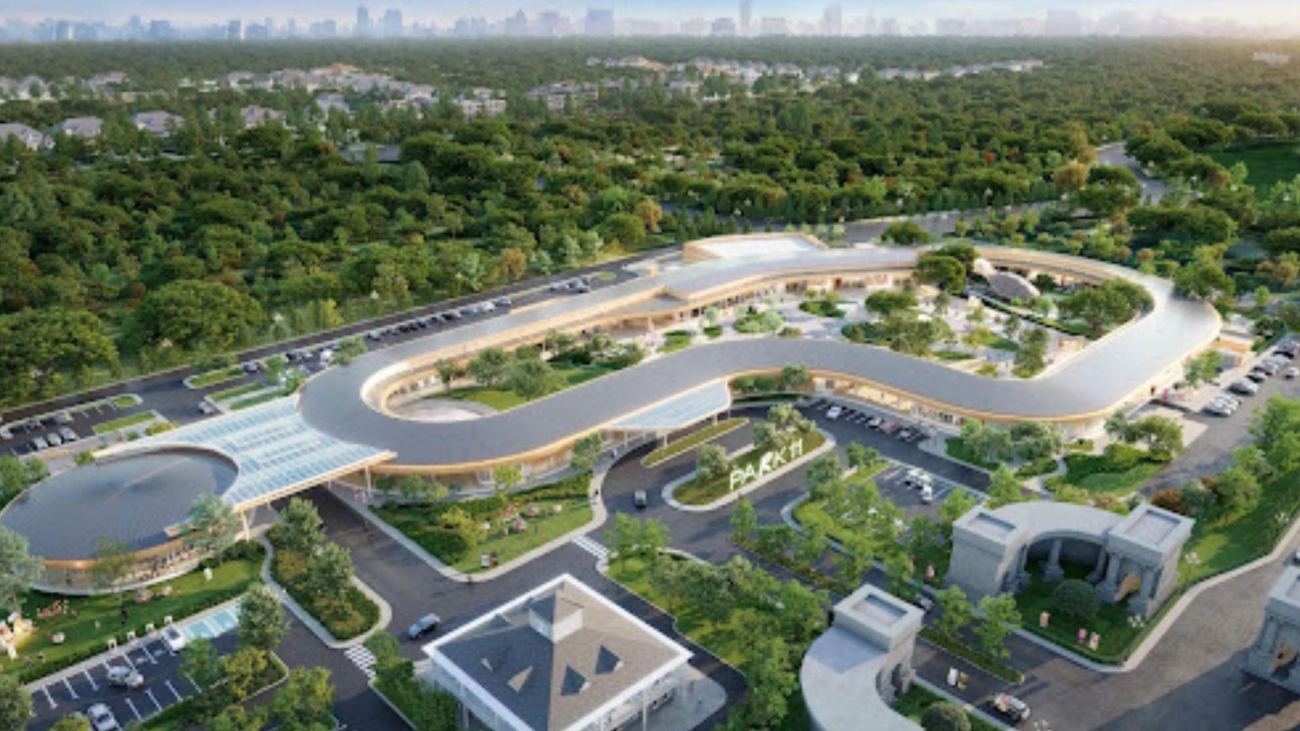
The flagship development of Reignwood Group in Pathum Thani, Reignwood Park, serves as a primary example of how an international operating history is applied to a Thai residential community. By integrating Robinswood Golf Club membership, proximity to a top-tier international school, and a connection to the group’s broader global portfolio, the project has established itself as one of the branded residences Thailand investors increasingly view as a benchmark for luxury. In this context, the “brand” is not merely a licensed label, but rather the cumulative weight of the group’s multi-decade presence across both China and Thailand.
This kind of structure gives buyers, particularly those already familiar with the group’s presence in China, a reference point they can independently verify rather than a promise they have to take at face value.
How to Evaluate a Branded Residence Before Buying
Before treating a “branded” label as a reason to pay a premium, buyers should look at a few practical points. First, confirm whether the brand is genuinely tied to an established group with a verifiable history, or simply licensed for the project. Second, check how much of the promised development is actually complete versus still under construction. Third, understand exactly what is bundled into ownership, such as club memberships or school access, and confirm those benefits directly rather than relying on marketing copy. Finally, compare the group’s other completed assets, both in Thailand and abroad, to assess whether its scale and delivery record match the confidence being asked of the buyer.
The branded residence label is becoming more common in Thailand’s luxury market, and it will likely continue to grow as buyers place greater weight on trust and delivery certainty. But the premium attached to the word “branded” is only justified when there is a verifiable group history behind it. For buyers weighing long-term, multi-generational purchases, that history, more than the label itself, is what ultimately protects the investment.